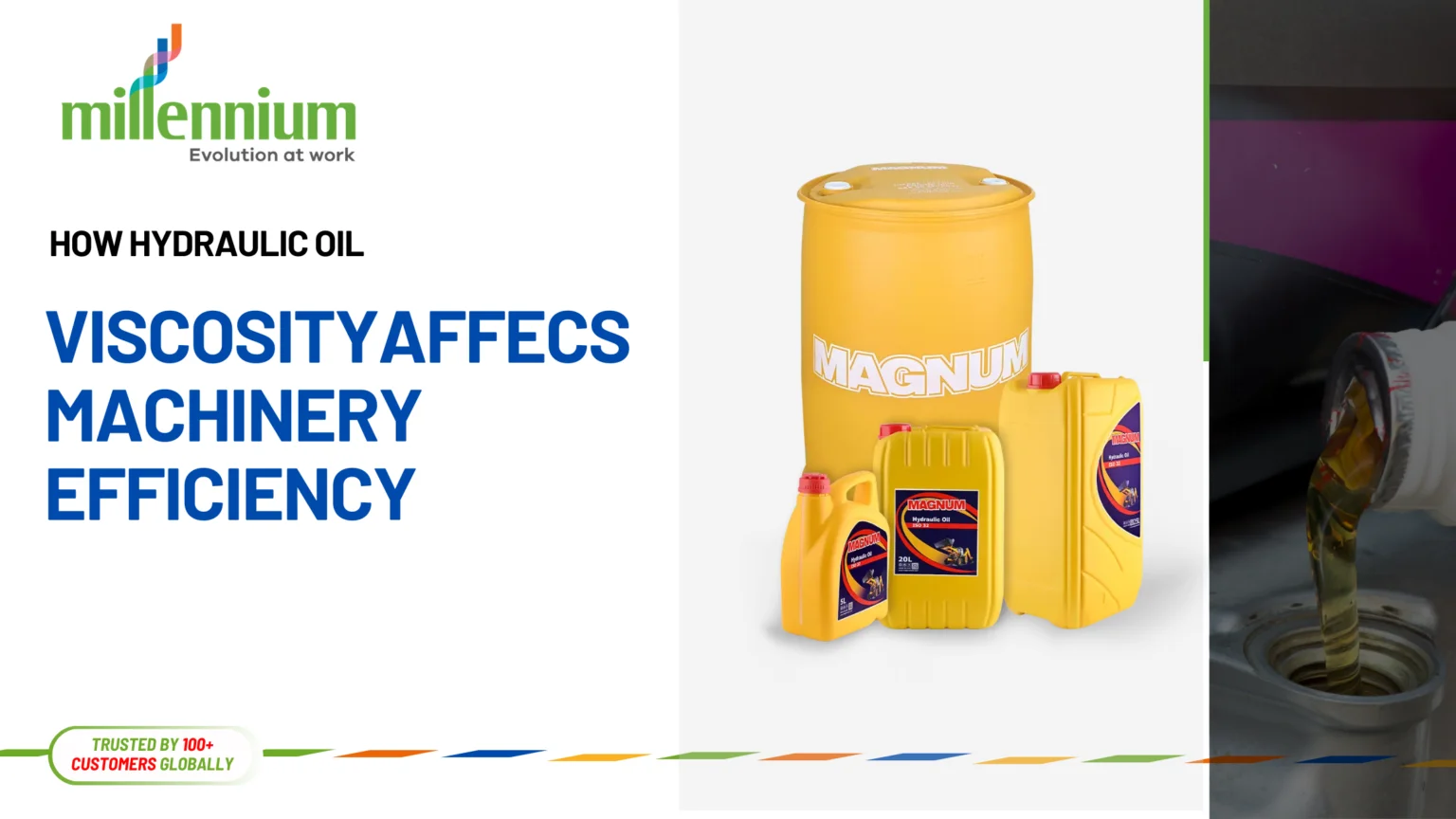
In industrial environments, hydraulic systems operate under high pressure, heavy loads, and continuous duty cycles. From injection molding machines to excavators and CNC equipment, performance depends heavily on the condition and properties of the hydraulic fluid inside the system. Among those properties, hydraulic oil viscosity plays a defining role in determining how effectively machinery performs. When properly controlled, it directly improves hydraulic oil efficiency, reduces wear, and stabilizes system output.
A well-balanced hydraulic system relies on fluid characteristics that match operational demands. Even small deviations in oil thickness can affect responsiveness, energy consumption, and component reliability.
What Exactly Is Hydraulic Oil Viscosity?
Viscosity refers to the internal resistance of a fluid to flow. It determines how easily hydraulic oil moves through pumps, valves, pipelines, and actuators. A thicker oil flows more slowly, while a thinner oil circulates more quickly.
In hydraulic systems, oil must accomplish two main tasks simultaneously: transmit power efficiently and provide a protective lubrication film between moving parts. The oil must therefore be fluid enough to move rapidly through tight clearances while thick enough to prevent metal-to-metal contact.
The correct viscosity ensures that pressure is maintained consistently across the system without unnecessary strain on pumps or excessive leakage.
How Viscosity Influences System Efficiency
1. Energy Efficiency
The relationship between viscosity and energy consumption is direct. If oil is too thick, the hydraulic pump must exert more force to push it through the system. This increased resistance causes higher power draw, leading to elevated operating costs and unnecessary strain on equipment.
Conversely, oil that is too thin may leak internally across pump components and valves. This reduces volumetric efficiency because some of the pressurized fluid fails to contribute to useful work. As a result, the pump must compensate by operating longer or at higher pressure levels.
Maintaining the appropriate viscosity minimizes internal losses and optimizes fluid movement, ensuring that the majority of input energy is converted into productive output.
2. Component Wear and Longevity
Hydraulic machinery relies on tight tolerances and high-pressure interactions between moving components. A stable lubrication film is critical for protecting these parts.
When viscosity drops below recommended levels:
-
Protective oil film becomes insufficient
-
Friction increases
-
Surface damage accelerates
If viscosity is too high:
-
Oil circulation may be delayed during startup
-
Air entrapment and cavitation risks increase
-
Localized stress may occur in sensitive components
Proper viscosity maintains a consistent lubricating barrier that reduces wear, lowers maintenance frequency, and extends equipment life.
3. Temperature Control
Hydraulic systems generate significant heat during operation. Fluid friction, mechanical motion, and pressure changes all contribute to temperature rise.
Oil with excessive thickness creates additional resistance, increasing frictional heat. Over time, this can degrade seals, oxidize the fluid, and reduce overall system stability.
Oil that is too thin may fail to absorb and distribute heat effectively under load. This can lead to hotspots within pumps and actuators.
Correct viscosity ensures balanced heat transfer, maintaining stable operating temperatures and preventing thermal stress.
Choosing the Right ISO Viscosity Grade
Hydraulic oils are classified by ISO viscosity grades (ISO VG), which define the oil’s flow characteristics at a standard reference temperature.
Selecting the appropriate grade requires evaluating:
-
Ambient climate conditions
-
Operating temperature range
-
Equipment manufacturer specifications
-
Load intensity and duty cycle
For example, equipment operating in cold environments may require a lower viscosity grade to allow smooth startup. Systems exposed to high temperatures or heavy loads often benefit from higher grades to maintain adequate film strength.
Choosing the right grade ensures optimal flow and protection under real-world conditions.
Temperature, Stability, and the Role of the Viscosity Index
The viscosity index (VI) indicates how much an oil’s viscosity changes as temperature fluctuates. A higher VI means the oil remains more stable across temperature variations.
In industrial settings, hydraulic systems often start cold and reach elevated operating temperatures quickly. Oils with strong temperature stability maintain consistent thickness throughout these changes.
This stability ensures predictable performance, smoother actuator response, and reduced risk of thermal breakdown. High-VI oils are especially beneficial in equipment exposed to variable climates or fluctuating workloads.
What Happens When Viscosity Goes Wrong
When viscosity falls outside recommended limits, several operational issues can arise:
-
Increased fuel or electricity consumption
-
Reduced system responsiveness
-
Noise caused by cavitation
-
Seal deterioration
-
Overheating
-
Irregular pressure fluctuations
Persistent mismatch between oil viscosity and system requirements can eventually result in pump failure or major hydraulic breakdown.
Regular monitoring helps detect changes before they become critical.
Maintenance Tips to Preserve Viscosity and Performance
Maintaining viscosity requires proactive fluid management practices.
Recommended steps include:
-
Conduct periodic oil analysis
-
Monitor operating temperature levels
-
Use high-quality filtration systems
-
Prevent water contamination
-
Replace oil according to manufacturer schedules
Contaminants and oxidation can alter fluid properties over time. Maintaining cleanliness and proper storage conditions preserves oil stability and ensures consistent performance.
MAGNUM Hydraulic Oils Built for Stability and Efficiency
High-performance hydraulic fluids are formulated to maintain consistent characteristics under demanding conditions. MAGNUM Hydraulic Oils are engineered with advanced additives to resist oxidation, control wear, and deliver stable viscosity across varying temperatures.
Their balanced formulation supports smooth pump operation, reliable pressure control, and extended service intervals. By maintaining fluid integrity, they help reduce downtime and protect valuable hydraulic assets.
Final Thoughts
Hydraulic systems depend heavily on fluid performance, and viscosity is at the core of that performance. Proper oil thickness ensures efficient energy transfer, reliable lubrication, and effective temperature regulation. Incorrect viscosity, however, can lead to energy loss, component damage, and costly downtime.
By selecting the correct ISO viscosity grade, monitoring oil condition, and using high-quality hydraulic fluids, operators can significantly enhance machinery reliability and productivity. Careful viscosity management remains one of the most practical and impactful ways to sustain long-term hydraulic system efficiency.




Leave a Reply