When people start planning a home renovation, flooring quickly becomes one of the biggest decisions. It affects how a room looks, how comfortable it feels, and how well the space holds up over time.
Many homeowners compare laminate flooring with engineered wood flooring. At first, the two can look almost identical. Both offer wood-inspired designs, and both are commonly used in modern homes.
But the similarity mostly ends at the surface. The way these floors are made is quite different, and that difference matters in everyday life.
Flooring specialists often say the best way to choose a floor is to understand what sits beneath the surface. Once you know how each option behaves, the decision becomes much clearer.
Why Do Homeowners Often Compare These Two Flooring Options?
The main reason is simple. Both options give a wood-style appearance without the complexity of traditional hardwood floors.
Some homeowners lean towards laminate flooring because it is usually easier on the budget. It is also widely available and comes in many colours, textures, and finishes. For people renovating several rooms at once, this flexibility can be helpful.
Others prefer engineered wood flooring because it contains real wood. Even though it is not solid hardwood, the surface layer is genuine timber. That small detail makes a big difference to many homeowners who want a natural look and feel.
Interior designers often see these two materials appear in the same renovation plans, which is why the comparison comes up so often.
What Materials Are Used to Make These Floors?
The structure of the flooring is where the real difference begins.
What Gives One Option Its Natural Appearance?
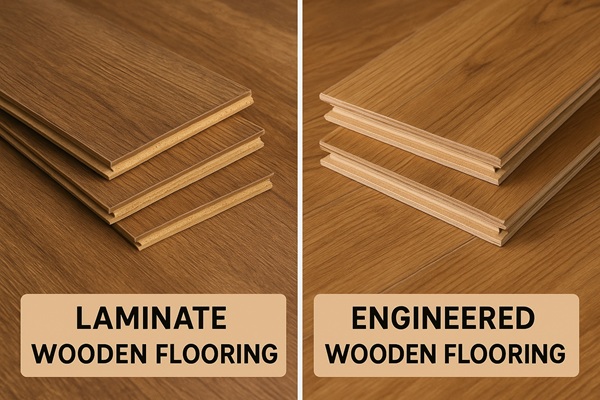
Engineered wood flooring is made from multiple layers of wood that are pressed together. The top layer is real hardwood, while the layers underneath provide strength and stability.
Because the top surface is natural timber, the grain patterns are unique. No two planks look the same. Many homeowners appreciate that small variation because it adds character to the floor.
One design that has become particularly popular in recent years is grey engineered herringbone flooring. The pattern creates a classic layout, while the soft grey tone fits easily with modern interiors.
You will often see this style used in open living spaces where homeowners want the flooring to make a visual statement.
How Is the Alternative Flooring Made?
Laminate flooring uses a different approach. Instead of a real wood surface, it relies on a strong fibreboard core. On top of that sits a printed layer designed to look like wood grain.
A clear protective coating is added above the design. This layer helps protect the floor from scratches and everyday wear and tear.
The result is a floor that can look quite similar to wood from a distance. However, the texture and depth are not the same as natural timber.
What Are the Key Differences Between the Two?
When homeowners compare flooring options, they usually focus on a few practical factors. Durability, appearance, and maintenance are often at the top of the list.
The table below gives a quick overview.
| Feature | Engineered Wood Flooring | Laminate Flooring |
| Surface | Real hardwood layer | Printed wood image |
| Appearance | Natural grain and texture | Wood-style design |
| Longevity | Long-lasting with proper care | Durable but not finished |
| Repair | Some types can be lightly sanded | Cannot be sanded |
| Cost | Typically higher | Usually more affordable |
Flooring experts often explain it in simple terms. One option gives you real wood. The other gives you the look of wood.
Which Flooring Works Best in Different Parts of a Home?
Not every room experiences the same amount of activity. That is why flooring professionals often suggest thinking about where the floor will actually be used.
Living Rooms
Living spaces are where families spend most of their time. Many homeowners want these rooms to feel warm and welcoming.
Because of that, designers often recommend engineered wood flooring in living areas. The real timber surface tends to create a more natural and comfortable atmosphere.
Patterns like grey engineered herringbone flooring are also common in larger rooms. The layout adds visual interest and can make the space feel more refined.
Bedrooms
Bedrooms usually see less foot traffic than other parts of the home. This means both flooring options can work well here.
Some homeowners choose laminate flooring in bedrooms because it provides a clean, stylish look without significantly increasing renovation costs.
Adding rugs or soft furnishings can also make the room feel warmer and more relaxed.
Hallways
Hallways are busy areas. People walk through them constantly, often wearing shoes.
For that reason, durability becomes important. Many flooring specialists prefer engineered wood flooring in hallways because the layered construction provides stability and long-term strength.
Conclusion
Experienced flooring installers often share a few simple pieces of advice with homeowners.
Before making a final decision, it helps to:
- Look at flooring samples in natural light
- Think about how often each room is used
- Consider how the floor colour works with walls and furniture
- Choose a style that will still look appealing years later
For example, neutral tones such as grey engineered herringbone flooring often work well with modern interiors because they pair easily with a range of colour palettes.
At the same time, laminate flooring can be a practical solution for rental homes, quick renovations, or projects where budget is a key concern.
In the end, the right flooring is the one that fits your home, your lifestyle, and the atmosphere you want to create in your space.




Leave a Reply