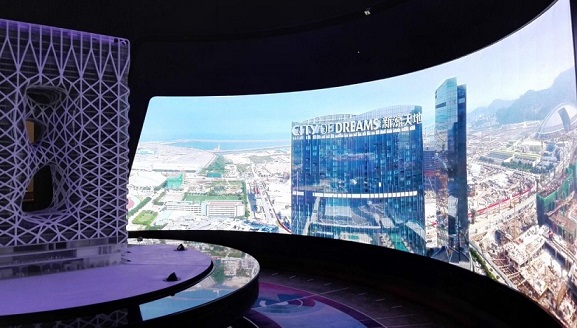
Retail has changed fast, and shoppers now expect bold visuals that pull them in at a glance. A curved LED screen does this with ease. It wraps light, colour, and motion into one smooth shape that feels modern and alive. Straight screens still work, but brands now need something that stops people mid-stride.
Many stores struggle to stand out in busy shopping areas. Space is tight, and old displays no longer make an impact. A curved screen solves this with shape, scale, and flow.
This guide walks you through what makes a curved display so effective, how retail brands use it, and what to check before you buy.
What Is a Curved LED Screen?
A curved LED screen uses a flexible panel that bends to form a soft arc or full wrap. It keeps the same brightness and clarity as a flat LED but creates depth and movement. This shape pulls the eye in, which is why it performs so well in retail stores.
Why Retail Stores Prefer a Curved Shape
- It feels natural and smooth
- It looks premium and modern
- It makes small spaces feel larger
- It draws people from more angles
Why Curved LED Screens Work So Well in Retail
1. Higher Stopping Power on Busy Walkways
Shoppers process curved visuals more quickly. The shape guides the eye and helps people focus. On a shop front, this means more footfall with little effort.
Key impact points
- More people notice the display from a distance
- Movement looks smoother across the curve
- Brand stories feel more dramatic
Retailers in fashion, tech, and beauty see sharp lifts in interest when they switch from flat screens to a curved LED screen for retail stores.
2. A Curved LED Screen Makes Products Feel Premium
Customers link curved displays with cutting-edge design. When they step inside a store, the screen becomes part of the atmosphere. This sets the tone before they even speak to staff.
How does it change perception?
- Products feel more exclusive
- The store feels more innovative
- Customers stay longer
The LED screen curve also softens hard lines in the shop, which makes the space feel more refined.
3. Flexible Shapes Fit Any Store Layout
Some stores are narrow. Others have pillars, corners, or long walkways. A curved LED screen for retail stores bends around these, which helps brands add strong visuals without losing floor space.
Layout ideas
- Wrap the curve around a corner
- Build a sweeping arc behind the till
- Create a semi-circle for a product launch
- Use a hanging curved display at the entrance
4. Better Storytelling With Movement and Flow
An LED screen curve keeps videos moving in one smooth line. Motion looks more natural along a curve than across a flat edge. This helps brands guide shoppers from a teaser to a full message.
Examples of strong flow
- Skincare routines from step one to step three
- Outfit reveals in fashion displays
- Product features shown in sequence
5. Energy-Efficient and Long-Lasting Technology
Modern curved displays use fine LED modules that keep power use low. They run cool, stay bright, and last for years when installed well.
Simple maintenance
- Front-service LED modules
- Easy panel replacement
- Durable casing for daily retail use
Types of Curved LED Screens for Retail Stores
Soft-Module Curved Screens
These panels bend easily and hold their shape, making them ideal for tight curves. They allow creative layouts without losing image quality.
Concave and Convex Curves
- Concave screens curve inward to create an immersive effect.
- Convex screens curve outward to catch attention from a distance.
Cylinder and Wave-Shape Screens
Cylinder screens offer full 360-degree visibility. Wave-shaped screens add movement and style while using very little space.
How to Choose the Right Curved LED Screen for Your Store
1. Pick the Right Pixel Pitch
Pixel pitch is the space between LEDs. A lower pitch gives sharper detail.
For retail use
- 1.2–2.5mm for close viewing
- 3–4mm for shop windows
2. Match Brightness to Your Store Lighting
Shops with bright lighting need higher brightness. Window screens need even more.
Ideal range
- 800–1500 nits for indoor use
- 2000+ nits for windows
3. Look at Colour Accuracy
Good retail screens use wide colour gamuts and fine calibration. This keeps product colours true, which is key for fashion and beauty stores.
What to check:
- Strong colour uniformity across the full curve
- Calibration that avoids colour shift at the edges
- LED panels with a wide colour range for rich tones
4. Check the Curve Radius
Each screen has a minimum bend radius. A tighter curve needs flexible modules. If the curve is too tight for the panel, you risk damage.
Key points to note:
- Always confirm the minimum safe radius for your panel type
- Flexible modules are needed for tight curves
- A wider radius suits large displays with long viewing distances
5. Confirm Installation Support
Retail installs happen fast. Choose a supplier who can:
- Handle site checks
- Test the curve radius
- Fit panels cleanly
- Offer after-care
A well-installed LED screen curve lasts longer and looks better.
Creative Ways Retail Stores Use Curved LED Screens
Entrance Arches
The entrance to the building features an LED arch, which creates an exciting atmosphere. The arch establishes the first impression for visitors entering the space.
360-Degree Product Zones
Brands create full LED circles around new products. This works well for launches and seasonal ranges.
Curved Walls for Lookbooks
Fashion retailers use curved walls to showcase outfits in smooth, flowing motion that feels natural to the eye.
Common Mistakes to Avoid
Most retailers begin their adoption of curved LED displays without investigating essential requirements. The display errors result in two negative effects, which include reducing display effectiveness and decreasing display lifespan.
- Wrong pixel pitch: Choosing an incorrect pixel pitch between two extreme options leads to viewing distances which result in either blurred vision or lost visual information.
- Low brightness levels: Displays with weak brightness fade fast in strong lighting and lose attention at the shop front.
- Curve radius errors: Selecting a curve radius that exceeds the design specifications of the panel will result in operational pressure, which leads to component failure.
- Poor content design: Content created for flat screens displays visual problems when it is shown on a curved surface because it disrupts natural visual movement and makes it harder to comprehend content.
Conclusion
A curved LED screen brings power, depth, and motion to any retail store. It lifts the look of the space and makes products shine with very little effort. When brands want to stand out, the LED screen creates a bold visual shape that flat displays cannot match. With the right pixel pitch, brightness, and design, the screen becomes a key part of the store experience.
If you plan your layout well and match the screen to your goals, the result will feel natural and effortless. Your store becomes a place that draws people in and holds their attention.
FAQs
Do curved LED screens provide better performance than flat screens for retail store displays?
Yes, for many stores because a curved LED screen brings more visual appeal, and it operates well in limited space. The system enables effective storytelling because it provides continuous motion and various shape transformations.
What is the lifespan of a curved LED display screen?
The majority of top-quality displays operate between 50000 hours and 100000 hours according to their expected lifespan. The device can function for several years without major problems when it receives proper maintenance and a stable electricity supply.
Is it possible to use a curved LED screen in my compact retail space?
Yes. Curved LED modules bend around corners and narrow spaces, which makes them ideal for compact layouts. You can create arcs, waves, or slim-line designs.
What content works best on a curved display?
The display shows slow-motion content which combines bold colours with product close-ups and soft transitions. The display shows curved motion, which moves through flowing motion.

Leave a Reply